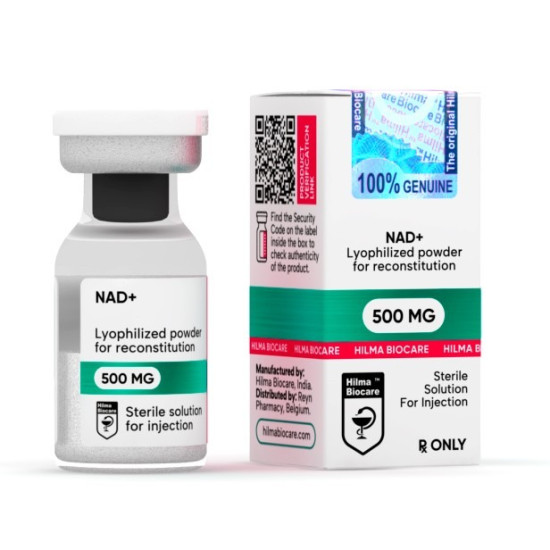
NAD+ (nicotinamide adenine dinucleotide) is a
coenzyme present in all living cells. NAD is a dinucleotide composed of two
nucleotides linked by their phosphate groups. One nucleotide contains adenine
as the nitrogenous base, the other nicotinamide. Nicotinamide adenine
dinucleotide exists in two forms: oxidized (NAD+, NADox) and reduced (NADH,
NADred). In metabolic processes, NAD participates in redox reactions, accepting
or donating electrons. NAD+ is synthesized de novo from amino acids and is also
formed by recycling the breakdown products of pyridine nucleotides.
MAIN
FUNCTIONS
NAD+ is responsible for energy production
(ATP), DNA repair, immune function, and protection against aging. With age, its
levels decrease by 50–80%, leading to fatigue and disease. NAD+ is often used
in anti-aging therapies to improve metabolism and cellular regeneration.
Cellular energy: NAD+ acts as a “power plant,” transporting electrons to generate
energy in the mitochondria.
DNA repair: It
is involved in repairing damaged DNA molecules, which is critical for
preventing cellular aging.
Anti-aging: NAD+
levels decline with age, and increasing them helps slow the aging process and
support cognitive function.
Metabolism regulation: It regulates metabolism, inflammation, and helps cells function
properly.
DOSAGE AND
APPLICATION
The lyophilized form of NAD+ is usually
injected subcutaneously into the fat layer (often in the abdominal area).
The recommended starting dose is 50 mg per
injection. In most cases, it is not recommended to administer more than 100 mg
per injection. In some cases, injections may cause a burning sensation,
especially when exceeding the recommended dosage.
Frequency: subcutaneous NAD+ administration
protocols are quite flexible. A typical regimen used as part of preventative
therapy for a healthy middle-aged individual might look like this:
Weeks 1-2: 25 mg twice a week;
Weeks 3-4: 50 mg twice a week;
Weeks 5-6: 100 mg twice a week;
Weeks 7+: 100 mg up to three times a week.
However, to achieve optimal results, the
dosage should be individualized. The goal of determining the administration
method is not a specific milligram dose, but rather achieving and maintaining
an optimal intracellular NAD+ range. The optimal range is considered to be
40-100 μM. Levels above 100 μM generally provide no additional benefit and may
carry risks. Levels below 40 μM indicate that cells are not receiving the
required amount of the substance.