

Brand: Cygnus
Model: Cygnus
Turinabol 10mg is an excellent assistant in rapid muscle growth
Turinadrol can be an excellent replacement for methandienone in combination with testosterone or nandrolone. The use of these AAS bundles will allow you to gain high-quality mass. Now all well-known brands produce turinabol, but accord..
$30.00
Ex Tax:$30.00
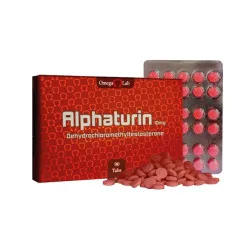

-22 %
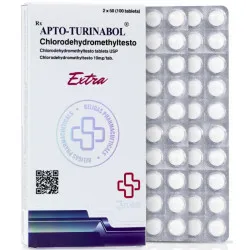
Brand: Beligas Pharmaceuticals
Model: Beligas Pharmaceuticals
Apto-Turinabol, the active ingredient is Chlorodehydromethyltestosterone, which is very similar in structure to Methandrostenolone. Apto-Turinabol has a very weak androgen activity, which is only 50% of testosterone, whereas anabolic activity reaches 180%. The drug is not converted into estrogens, d..
$52.00
Ex Tax:$52.00
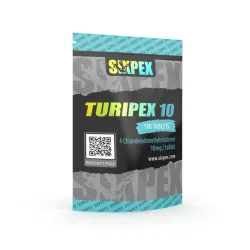
Brand: SIXPEX USA
Model: SIXPEX
Oral Turinabol is somewhat of a unique anabolic steroid. Specifically, Oral Turinabol is a cross between Methandrostenolone and Clostebol. This provides a steroid with powerful anabolic action while at the same time minimizing androgenic characteristics. Oral Turinabol also carries somewhat of an in..
$78.00
Ex Tax:$78.00
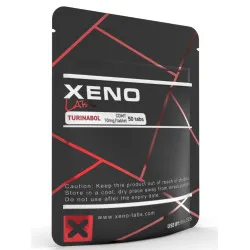
Brand: Xeno Labs
Model: Xeno Labs
Turi 10mg USA (4-Chlorodehydromethyltestosterone) is a modified form of DIANAMED 10 (Methandienone), basically, it is a combination of the chemical structures of DIANAMED 10 (Methandienone)and Clostebol (4-chlorotestosterone). The necessary doses of TURIMED 10 (Turinabol) are considered to be q..
$56.00
Ex Tax:$56.00
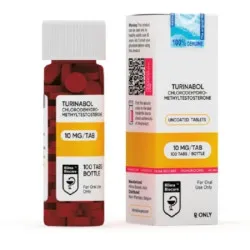
Brand: Hilma Biocare
Model: Hilma Biocare
Turinabol is somewhat of a unique anabolic steroid. This is a steroid with powerful anabolic action while at the same time minimizing androgenic characteristics.Turinabol was first released by Jenapharm out of East Germany in 1962.The steroid would enjoy a very high safety rating for decades not onl..
$37.00
Ex Tax:$37.00
-16 %
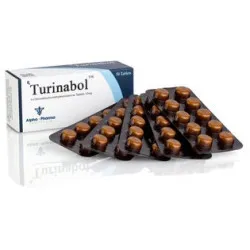
Brand: Alpha Pharma
Model: Alpha Pharma
Turinabol is indicated for hormone replacement therapy in men suffering from androgen deficiency or in severe cases of catabolism.Turinabol 10Mg by Alpha Pharma box of 50cmp...
$41.00 $49.00
Ex Tax:$41.00
Brand: Somatrop Lab
Model: Somatrop Lab
Turinabol from Somatrop-Lab is an anabolic steroid favored for its ability to enhance athletic performance and physique without excessive water retention. Key benefits include:Increase in Lean Muscle Mass: Promotes clean and sustainable muscle growth, ideal for athletes and bodybuilders. Increase in..
$60.00
Ex Tax:$60.00
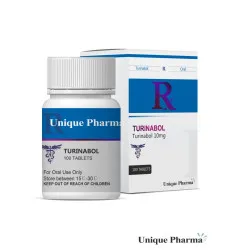
Brand: Unique Pharma
Model: Unique Pharma
4-Chlorohydromethyltestosterone
is a performance-enhancing steroid used to increase muscle mass. It is not
FDA-approved and is used outside medical applications in bodybuilding and sports.
Modern applications focus on improving muscle strength and endurance.
Substitution therapy (SGT) is not req..
$38.00
Ex Tax:$38.00
-22 %
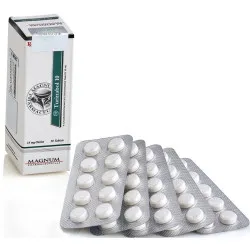
Brand: Magnum Pharmaceuticals
Model: Magnum Pharmaceuticals
4-chlorodehydromethyltestosterone Tabl. 10 mg | 50 Tabl...
$28.00 $36.00
Ex Tax:$28.00
-22 %
Brand: Evolve Biolabs
Model: Evolve Biolabs
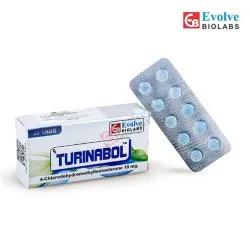
TURINABOL – 4 Chlorodihydromethyltestosterone 10 mgA potent oral steroid 4
Chlorodehydromethyltestosterone 10 mg provides remarkable strength and muscle
growth This ingredient
promotes and supports Lean. Muscle growth is great for bodybuilders and
athletes trying to improve their performanc..
$36.00 $46.00
Ex Tax:$36.00
Brand: GOMEISA LABS
Model: Gomeisa Labs
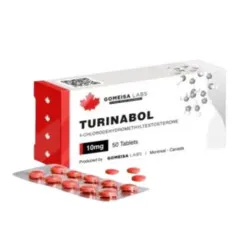
Turinabol binds to androgen receptors in muscle and other tissues. This promotes protein synthesis and nitrogen retention, supporting the development and maintenance of lean muscle tissue.Its chemical structure provides anabolic activity with relatively low estrogenic activity. This contributes to i..
$54.00
Ex Tax:$54.00
BUY 3 GET 1 FREE
-17 %
Brand: NITRO
Model: NITRO
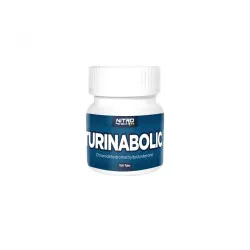
Turinabolic 10mg 100 tablets from Nitro Labs has a predominantly
anabolic effect combined with a relatively low androgenic component. Thus,
milligram for milligram, it has a weaker effect than Dianabol. Therefore, it is
not a drug that causes a rapid increase in strength, weight, and muscle mass...
$62.00 $75.00
Ex Tax:$62.00
-11 %
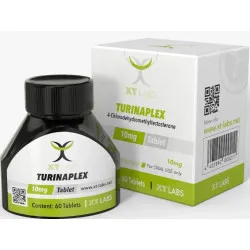
Brand: XT LABS USA
Model: XT LABS USA
Tbol is not a large volume steroid, but it does not mean that it does not have great benefits in cycles. As it is not aromatized, you do not have to worry about estrogenic side effects such as gynecomastia (female breasts), water retention (edema), insomnia or high blood pressure. No aromatize inhib..
$71.00 $80.00
Ex Tax:$71.00
Showing 1 to 24 of 24 (1 Pages)